
Introduction
A cracked windshield or damaged side window can disrupt your plans, but getting your vehicle repaired does not always require a trip to an auto glass shop. Mobile auto glass service allows a technician to come to your home, workplace, or another suitable location to inspect and repair or replace damaged glass. With a little preparation, you can help the appointment run smoothly and give the technician the space needed to complete the work safely.
Preparing for a mobile windshield repair or replacement involves more than parking your car outside. The technician may need access to the vehicle's interior and exterior, a reasonably clean work area, enough room for tools and equipment, and protection from unsuitable weather. You may also need to confirm your vehicle information, discuss insurance coverage, and plan for any required Advanced Driver Assistance Systems (ADAS) calibration.
For Utah drivers, changing temperatures, seasonal weather, and varying parking conditions can make advance planning especially useful. Knowing what to expect can help prevent avoidable delays and reduce uncertainty on the day of service.
This guide explains how to prepare your vehicle for a mobile auto glass appointment, what information to provide, how to handle weather and parking concerns, and what to check after the technician finishes the work.
1. Confirm the Appointment Details Before Service Day
A smooth mobile auto glass appointment begins with clear communication. Before the technician arrives, verify the service address, appointment window, type of glass damage, and work being performed.
Provide Accurate Vehicle Information
Share the details needed to identify the correct glass and installation requirements. Two vehicles from the same model year can have different windshield configurations, sensors, or camera systems.
Key Vehicle Details to Gather
Vehicle year, make, and model.
VIN, or Vehicle Identification Number, if requested.
Whether the damage affects the windshield, rear glass, door window, quarter glass, or another section.
The approximate location and size of any chip or crack.
Whether your vehicle has a head-up display, rain sensor, heated windshield, or driver-assistance cameras, if known.
The VIN can help a technician identify the appropriate replacement glass, including features that may not be obvious from the outside. If you are unsure about your windshield's specifications, do not guess. Provide the information you have and ask the service team to confirm the remaining details.
Explain the Damage Clearly
Describe how the damage happened and whether it has changed since you first noticed it. For example, a small rock chip may have developed into a longer crack after a cold night or a sudden temperature change.
Photographs can help communicate the damage before the appointment. Take clear pictures from outside the vehicle and, when safe and practical, from inside. Include a wider shot showing the damage's location and a closer view showing its shape.
These photos may help with an initial assessment, but they do not replace an in-person inspection. The technician must determine whether a repair is suitable or whether the damaged glass needs replacement. You can learn more about this process in our guide on what to expect from mobile windshield replacement at your home or workplace.
Confirm the Service Location and Arrival Window
Verify the full address, parking instructions, access restrictions, and the best contact number. If your workplace has a security gate, visitor parking rules, or a loading-area restriction, mention those details in advance.
Ask whether the appointment requires a particular amount of uninterrupted time. Windshield replacement, rock chip repair, and side-window replacement have different procedures, so the expected duration depends on the vehicle and the work required.
2. Choose a Suitable Location for Mobile Auto Glass Service
The technician needs a safe, accessible area to work around your vehicle. A convenient parking spot is not always a suitable worksite.
Make Enough Room Around the Vehicle
Whenever possible, park on a flat, stable surface with adequate room around the vehicle. Avoid placing the car tightly between other vehicles, against a wall, or directly beneath low branches.
Technicians may need to open doors fully, access the dashboard, position glass-handling equipment, and move tools around the vehicle. Additional space can be especially helpful when replacing a large windshield or glass panel on an RV or motorhome.
Before the appointment, remove nearby obstacles such as bicycles, storage boxes, garden equipment, or other items that could restrict access.
Check Workplace and Apartment Rules
Home driveways are often convenient, but mobile service may also be possible at a workplace or apartment complex. Confirm that the property allows vehicle repairs and that the technician can park in the designated area.
Some residential communities restrict commercial vehicles, prohibit work in shared parking areas, or require advance authorization. A quick check with property management can prevent an avoidable cancellation or relocation.
If you live in a busy urban area, ask whether a private driveway or another approved space would be more appropriate than street parking.
Consider Indoor and Covered Locations
A garage or covered parking space may offer protection from direct sunlight, rain, wind, and airborne debris. However, the technician needs enough clearance for the vehicle, tools, and replacement glass.
Do not assume that every garage is suitable. Low ceilings, narrow entrances, limited lighting, or insufficient room to open doors can make the work more difficult. Confirm the location with the service team before the appointment.
If an indoor space is unavailable, ask whether an outdoor location will work under the expected conditions.
3. Prepare for Utah's Weather Conditions
Weather can affect the suitability and timing of mobile auto glass service. Adhesives used during windshield replacement have specific application and curing requirements, while certain repairs may also be affected by moisture, temperature, or wind.
Check the Forecast Before the Technician Arrives
Look at the expected conditions for the appointment window, not just the weather at the beginning of the day. Rain, snow, strong wind, blowing dust, and extreme temperatures can affect the work area.
If precipitation is expected, contact the service provider before making alternative arrangements. The technician can explain whether the job can proceed outdoors, requires covered parking, or should be rescheduled.
Never assume that a technician can safely install glass in every weather condition simply because the service is mobile.
Avoid Applying Heat or Cold to Damaged Glass
A damaged windshield can be sensitive to sudden temperature changes. Directing hot air at a crack, pouring warm water over icy glass, or using extreme cooling methods may worsen the damage.
Instead, leave the glass alone and explain any recent changes in the crack's size. Avoid pressing on the damaged area or attempting to straighten a crack yourself.
If the windshield damage obstructs your view or appears to compromise safe driving, arrange appropriate assistance rather than driving the vehicle to a shop.
Keep the Work Area Clean and Dry
Move the vehicle away from sprinklers, muddy surfaces, dusty construction areas, or locations where debris is likely to fall. If your vehicle is covered in loose dirt or snow, clear away what you can safely remove without putting pressure on damaged glass.
Your technician can advise whether additional cleaning is needed before work begins. A suitable environment helps the technician follow the correct installation or repair procedure.
4. Clear the Vehicle's Interior Before the Appointment
The condition of the vehicle's interior can affect access, especially during windshield replacement and side-window work. You do not need to detail your car, but clearing the relevant areas can save time.
Remove Items From the Dashboard
Take away loose objects such as phone mounts, papers, sunglasses, decorations, and electronic accessories that could obstruct access to the windshield or dashboard.
If a device is attached near a driver-assistance camera, ask the technician how it should be handled. Avoid removing factory-installed sensors or camera housings yourself.
Clear the Front Seats and Footwells
Move bags, clothing, water bottles, and other personal belongings away from the front seats and footwells. Technicians may need access to interior trim, the dashboard area, or the vehicle's controls.
For side-window replacement, clear the affected seat and door area. For rear glass, remove items that block access to the rear window or cargo area.
Protect Personal Belongings
If a window has shattered, glass fragments may be present inside the vehicle. Keep children and pets away from the affected area, and avoid reaching into broken glass.
Remove valuables and important documents before the appointment. If the damage has left the interior exposed, ask the service provider how best to protect the vehicle until the technician arrives.
5. Understand Whether Your Windshield Needs Repair or Replacement
Knowing the likely service type helps you prepare, although the technician makes the final assessment after inspecting the damage.
When Rock Chip Repair May Be Appropriate
Rock chip repair is intended for certain types of limited windshield damage. A technician may be able to repair a small chip or suitable short crack by introducing specialized resin into the damaged area.
The decision depends on factors such as the damage's size, depth, location, age, and pattern. Damage in the driver's direct line of sight may require a more cautious assessment because even a successful repair can leave some visible marks.
Prompt evaluation is useful because dirt, moisture, vibration, and temperature changes can complicate a repair or allow damage to spread.
When Windshield Replacement May Be Necessary
Replacement may be recommended when the glass has extensive cracking, damage that compromises structural integrity, or damage that cannot be repaired appropriately.
A windshield does more than block wind and rain. It contributes to vehicle safety and can play a role in airbag performance and roof support, depending on the vehicle's design. That is why replacement should follow the vehicle manufacturer's procedures and use compatible materials.
Ask the technician to explain the recommendation if you are unsure why a repair is not suitable. A clear explanation helps you understand the safety considerations behind the decision.
Why You Should Not Delay an Assessment
A chip that appears minor can spread after repeated vibration, temperature changes, or driving over rough roads. A cracked windshield can also affect visibility, particularly when sunlight or oncoming headlights reflect across the damaged area.
Arrange an assessment promptly rather than waiting for the damage to become more extensive. If the glass is unsafe, avoid driving until you have received appropriate guidance.
6. Prepare for ADAS and Camera Calibration
Many newer vehicles use Advanced Driver Assistance Systems to support functions such as lane-departure warnings, forward collision alerts, and automatic emergency braking. Depending on the vehicle, a camera or sensor may be mounted near the windshield.
Why Calibration May Be Required
When a windshield is replaced, the position or optical characteristics of the glass in relation to a camera may change. Some vehicles consequently require ADAS calibration after replacement to ensure the relevant system operates according to manufacturer specifications.
Calibration requirements vary by make, model, year, equipment, and repair procedure. Not every vehicle has windshield-mounted cameras, and not every glass service involves the same calibration steps.
Tell the service team if your vehicle has driver-assistance features, and ask whether calibration is required as part of the job.
What to Ask Before the Appointment
Confirm whether the technician can perform the required calibration at your location or whether the vehicle needs additional in-shop work. Some procedures require specialized targets, controlled conditions, diagnostic equipment, or a road test.
Also ask whether the calibration is included in the service estimate or quoted separately. If the manufacturer specifies additional steps, those requirements should be addressed before the vehicle is returned to normal use.
Do not assume that a dashboard warning light being off proves a camera is correctly calibrated. Follow the technician's instructions and any vehicle-specific requirements.
7. Check Your Insurance Coverage and Payment Details
Auto insurance may cover certain types of glass damage, but coverage varies by policy, deductible, insurer, and state requirements. Confirm the details before the appointment so you understand any costs you may need to pay.
Contact Your Insurance Provider if Needed
Ask whether your policy covers windshield repair, windshield replacement, or other damaged vehicle glass. Find out whether a deductible applies and whether the insurer requires an approved process or claim authorization.
Some policies treat qualifying chip repairs differently from full windshield replacements. Do not assume that a repair will be free or that every replacement is covered.
Prepare Relevant Claim Information
If you have already opened a claim, keep the claim number and insurer contact information available. You may also need your policy details or confirmation of an approved estimate.
Ask the service provider what documentation they can supply and whether they assist with insurance claims. Confirm who is responsible for submitting paperwork and whether you must approve any amount not covered by insurance.
Review the Estimate Before Work Begins
Make sure you understand the planned service, glass type, calibration requirements, applicable charges, and warranty terms. Ask about any unclear items before authorizing the work.
A written estimate and clear communication help prevent misunderstandings. If the technician discovers an issue that changes the scope or price, ask for an explanation before proceeding with additional work.
8. Keep Children, Pets, and Other People Away From the Work Area
Auto glass work involves sharp materials, specialized tools, adhesives, and the handling of heavy or fragile glass. Even a routine appointment requires a controlled workspace.
Keep children and pets indoors or well away from the vehicle while the technician is working. Let other household members or coworkers know that the parking area needs to remain clear.
Avoid standing beside the technician to watch the installation unless invited to do so. If you have questions, ask when it is safe and convenient rather than interrupting a procedure that requires careful handling.
If the vehicle has shattered glass, do not allow anyone to touch the fragments or sit in the affected area. Professional cleanup may be needed to remove glass from seats, door cavities, and other hard-to-reach spaces.
9. Know What Happens During a Mobile Windshield Replacement
Understanding the general process can help you plan your time and recognize why the technician may need uninterrupted access to the vehicle.
Step-by-Step Overview of the Process
Inspection and Preparation
The technician confirms the vehicle details, examines the damage, and checks that the replacement glass and necessary materials are appropriate. The surrounding work area and vehicle surfaces are prepared according to the installation procedure.
Removing the Damaged Glass
For replacement, the technician removes the existing windshield using suitable tools and follows procedures intended to protect the vehicle's body, interior, and surrounding components. The mounting area is prepared before the replacement glass is installed. Proper preparation matters because the adhesive bond is an essential part of the installation.
Installing the New Windshield
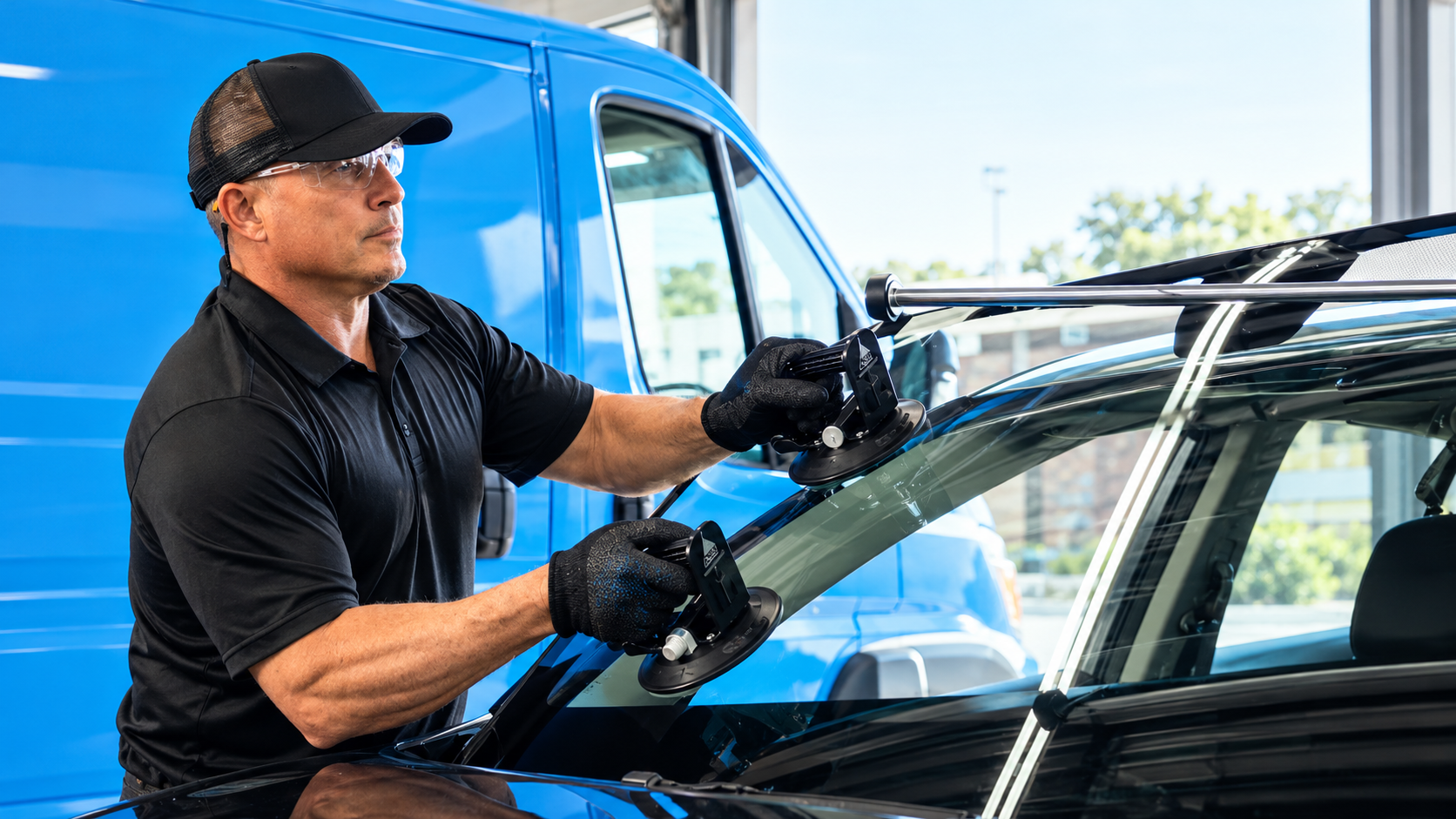
The replacement glass is positioned using the appropriate equipment and installation method. The technician applies the specified adhesive and follows the vehicle- and product-specific instructions. The process is not simply a matter of placing a new piece of glass into the opening. Correct positioning, adhesive application, and handling are important for the finished installation.
Calibration and Final Checks
If required, ADAS calibration is completed according to the vehicle's specifications. The technician may also check the installation, explain post-service restrictions, and advise when the vehicle can be driven. The exact process varies by vehicle and service type. Rock chip repair, door glass replacement, RV glass work, and full windshield replacement do not all follow the same steps.
10. Follow the Technician's After-Service Instructions
Your responsibilities do not end when the new glass is installed. Follow the specific instructions provided for your vehicle and the materials used.
Respect the Safe Drive-Away Time
Windshield replacement adhesives need time to develop the strength required for safe vehicle use. The minimum safe drive-away time depends on the adhesive, environmental conditions, vehicle requirements, and installation details.
Ask the technician for the exact time applicable to your vehicle. Do not rely on a general estimate found online or assume the car is ready to drive as soon as the installation looks finished.
Follow Cleaning and Window-Use Guidance
Your technician may recommend temporary precautions involving car washes, window operation, tape, or the way you close doors. These instructions depend on the installation method and adhesive system.
Follow the advice you receive rather than removing protective materials or cleaning the glass prematurely. If anything is unclear, ask before leaving the appointment.
Confirm Calibration and Warranty Information
If calibration was required, confirm whether it was completed and ask for any relevant documentation. Find out what to do if a warning light appears or a driver-assistance feature behaves unexpectedly.
Keep the invoice, service records, warranty information, and any insurance paperwork. If you notice water leaks, unusual wind noise, visible installation concerns, or other problems, contact the service provider promptly.
11. Special Considerations for RVs and Motorhomes
Preparing a recreational vehicle for mobile glass service can require more planning than preparing a passenger car. RVs and motorhomes have larger glass panels, different access requirements, and vehicle-specific installation considerations.
Provide the vehicle's make, model, year, and dimensions when requested. Explain whether the damaged glass is part of the cab, living area, or another section of the vehicle.
Choose a location with enough height and clearance for the technician to work safely. Check overhead obstructions, access roads, parking restrictions, and the stability of the surface.
Ask whether the service can be completed at your location and whether weather protection or additional equipment will be needed. For large or specialized glass panels, the technician may recommend an in-shop appointment if the site cannot support the required work. You can also review our dedicated motorhome and RV glass and windshields page for more details.
12. A Simple Checklist for Appointment Day
Use this checklist before your mobile auto glass technician arrives.
Confirm the appointment time, address, and contact number.
Share the vehicle year, make, model, and VIN if requested.
Send clear photos of the damage when helpful.
Verify that the parking area is accessible, stable, and spacious enough.
Check weather conditions and confirm any location concerns with the provider.
Remove loose items from the dashboard, seats, and affected work area.
Keep children, pets, and bystanders away from the vehicle.
Have insurance or claim information ready if applicable.
Confirm the estimated cost, planned service, and calibration requirements.
Arrange enough time to follow post-service instructions.
Ask for the safe drive-away time and any temporary restrictions.
Keep your invoice, warranty details, and calibration documentation.
Completing these steps does not guarantee that the appointment will be free of delays, but it can help reduce common problems and make it easier for the technician to focus on the repair or installation.
Conclusion
Preparing your vehicle for a mobile auto glass appointment is straightforward when you know what the technician needs. Confirming your vehicle information, choosing an accessible work location, clearing the interior, checking the weather, and arranging insurance details can help the appointment proceed more efficiently.
The most important consideration is safety. Windshield damage should be assessed promptly, replacement glass must be installed according to the appropriate procedures, and any required ADAS calibration should be addressed before the vehicle returns to normal use. Following the technician's instructions about adhesive curing, cleaning, and driving restrictions is equally important.
Mobile auto glass service offers convenience by bringing professional help to a suitable location. A little preparation helps you make the most of that convenience while supporting a careful, well-organized repair or replacement.
If your windshield, side window, RV glass, or motorhome glass is damaged, Rock Doc Auto Glass provides mobile and in-shop auto glass services across Utah. Contact the team to discuss the damage, confirm your service options, and determine the best way to prepare your vehicle.
Frequently Asked Questions
1. How should I prepare my car for a mobile windshield replacement?
Confirm your appointment, provide accurate vehicle details, and park in a safe, accessible location with enough room for the technician. Remove loose items from the dashboard and front seats, check the weather, and ask about calibration and post-installation driving restrictions.
2. Do I need to clean my car before a mobile auto glass appointment?
A full interior or exterior detailing is unnecessary. Remove personal belongings and loose objects from the affected area, and clear away loose dirt or snow when safe. Your technician will determine whether additional cleaning or preparation is needed before starting the work.
3. Can a mobile windshield replacement be completed in the rain?
It depends on the installation requirements and available protection. Moisture, wind, and other weather conditions can affect the work environment and adhesive application. Contact your service provider beforehand to confirm whether your location is suitable or whether covered parking or rescheduling is necessary.
4. How long does a mobile windshield replacement take?
The appointment length depends on the vehicle, glass configuration, installation procedure, and whether ADAS calibration is required. Ask for an estimated service window when booking. Remember that the time needed to complete the installation differs from the adhesive's safe drive-away time.
5. Can I drive immediately after a windshield replacement?
Not necessarily. Windshield adhesive needs time to reach the strength required for safe driving. Your technician will provide the minimum safe drive-away time based on the adhesive, conditions, and vehicle requirements. Follow that specific guidance rather than relying on a general estimate.
6. Does my car need ADAS calibration after windshield replacement?
Some vehicles require ADAS calibration because windshield replacement can affect the positioning or optical relationship of windshield-mounted cameras. Requirements depend on the vehicle and manufacturer procedures. Confirm whether calibration is necessary and ensure all required steps are completed before normal use.
7. Will auto insurance cover mobile windshield repair or replacement?
Coverage depends on your insurance policy, deductible, claim requirements, and the type of damage. Some policies cover eligible chip repairs differently from full replacements. Contact your insurer to verify benefits and ask your service provider whether assistance with insurance documentation is available.
8. Should I repair a small windshield chip before it spreads?
Yes, arranging a prompt assessment is generally advisable. Small chips can develop into larger cracks because of vibration, temperature changes, or road conditions. A technician can determine whether the damage is suitable for repair or whether replacement is the safer option.
9. Can mobile auto glass technicians replace side windows and RV windshields?
Mobile service may be available for side windows, rear glass, RV windshields, and motorhome glass, depending on the vehicle, glass availability, equipment, and worksite conditions. Provide the vehicle details and damaged glass location when booking so the service provider can confirm the appropriate arrangement.
10. What should I check after a mobile auto glass appointment?
Confirm that the technician has explained the safe drive-away time, cleaning instructions, and any temporary restrictions. If applicable, ask whether ADAS calibration is complete. Keep your invoice and warranty information, and report concerns such as water leaks, unusual wind noise, or unexpected driver-assistance warnings promptly.
