Introduction
Motorhomes and recreational vehicles are built for travel, adventure, and long hours on the open road. Whether you use your rig for weekend getaways or extended cross-country trips, these massive vehicles cover significant distances and encounter a wide variety of driving conditions. As a result, their expansive front glass is regularly exposed to road debris, changing weather, and other hazards that can lead to chips, cracks, or extensive damage.
Because RV and motorhome windshields are much larger and structurally distinct from standard passenger vehicle glass, replacing them requires specialized knowledge, equipment, and experience. Understanding when a total replacement is necessary, what the process involves, and why professional installation matters can help you make informed decisions to keep your home-on-wheels safe and road-ready.
Why RV and Motorhome Windshields Face Unique Challenges
Motorhomes and RVs spend most of their operational life on highways, interstate routes, and rural roads where exposure to flying debris is incredibly common. Rocks, gravel, and stray cargo kicked up by semi-trucks and surrounding traffic can strike your glass with immense force.
The unique design of recreational vehicles introduces specific vulnerabilities:
Massive Surface Area: The sheer size of an RV windshield creates a much larger target for road debris compared to a standard sedan or SUV.
Structural Stress: Larger glass panes undergo significant flexing and stress as the heavy vehicle maneuvers around tight corners, handles high winds, or navigates uneven terrain.
Vulnerability to Spread: Even a tiny pit or star-break can rapidly web out into a massive, unrepairable crack due to the constant vibrations and temperature fluctuations inherent to long-haul travel.
Because clear, unobstructed visibility is absolutely vital for operating a vehicle of this size safely, maintaining the condition of your glass should always be a top priority. When damage occurs, partnering with a specialist like Rock Doc Auto Glass ensures your motorhome receives the specialized care it demands.
Common Signs That Windshield Replacement May Be Necessary
Not every piece of glass damage requires a complete overhaul. In many situations, a swift, professional fix can save the glass and your budget. However, knowing the difference between a simple fix and an essential replacement is key to vehicle safety.
When You Can Choose Repair
A minor blemish can often be resolved without removing the glass. You might look into a quick fix if the damage meets these criteria:
The chip or ding is smaller than a quarter.
The damage is located well away from the driver’s direct line of sight.
The outer layer of glass is damaged, but the inner plastic safety layer remains intact.
When a Full Replacement is Required
You will likely need a complete replacement if you notice any of the following warning signs:
Spreading Cracks: Cracks that extend several inches or continue to grow across the glass.
Edge Damage: Any crack or chip that penetrates or sits right along the outer perimeter seal, which compromises the structural integrity of the entire piece of glass.
Vision Obstruction: Deep pitting or multiple chips located directly in the driver’s viewing field.
Substructural Damage: Multi-layered fractures or completely shattered sections.
To learn more about identifying these issues early, check out this guide on the common signs your windshield damage needs professional attention. If you are uncertain about the severity of a crack, the team at Rock Doc Auto Glass offers expert windshield replacement and repair options tailored to your specific vehicle state.
Why Prompt Attention to Windshield Damage Matters
One of the most costly mistakes an RV owner can make is delaying glass service. What looks like a harmless, tiny nick before you leave the driveway can easily turn into a web of cracks after a few hundred miles of driving.
Taking action the moment you notice damage is essential for several reasons:
Saves Money: Catching a small stone chip early allows for a straightforward windshield chip and crack repair rather than a full, expensive replacement. Understanding why fast windshield crack repair can save you money and improve safety can help you avoid unnecessary long-term expenses.
Preserves Integrity: The windshield serves as a vital structural component of the vehicle cabin, assisting in roof support during an impact or rollover.
Ensures Driving Clarity: Navigating a 40-foot motorhome through heavy rain, high winds, or nighttime traffic requires absolute visual clarity. Any glare or distortion caused by existing glass fractures increases driving strain and risk.
Reviewing a comprehensive resource like the complete guide to windshield chip repair for safer driving highlights just how simple it is to address minor issues before they disrupt your vacation plans.
Understanding the Windshield Replacement Process
Replacing glass on a Class A, B, or C motorhome is a highly precise operation that looks very different from standard automotive glass work. Because of the weight, size, and specialized urethane adhesives required, it is a multi-step process that requires specialized execution.
[Inspect & Prep] ➔ [Remove Old Seals & Glass] ➔ [Prep Frame & Apply Adhesive] ➔ [Set New Glass] ➔ [Cure & Calibrate]
Preparation and Assessment: Technicians inspect the surrounding fiberglass or metal frame for rust, rot, or shifting that could impact the fitment of the new unit.
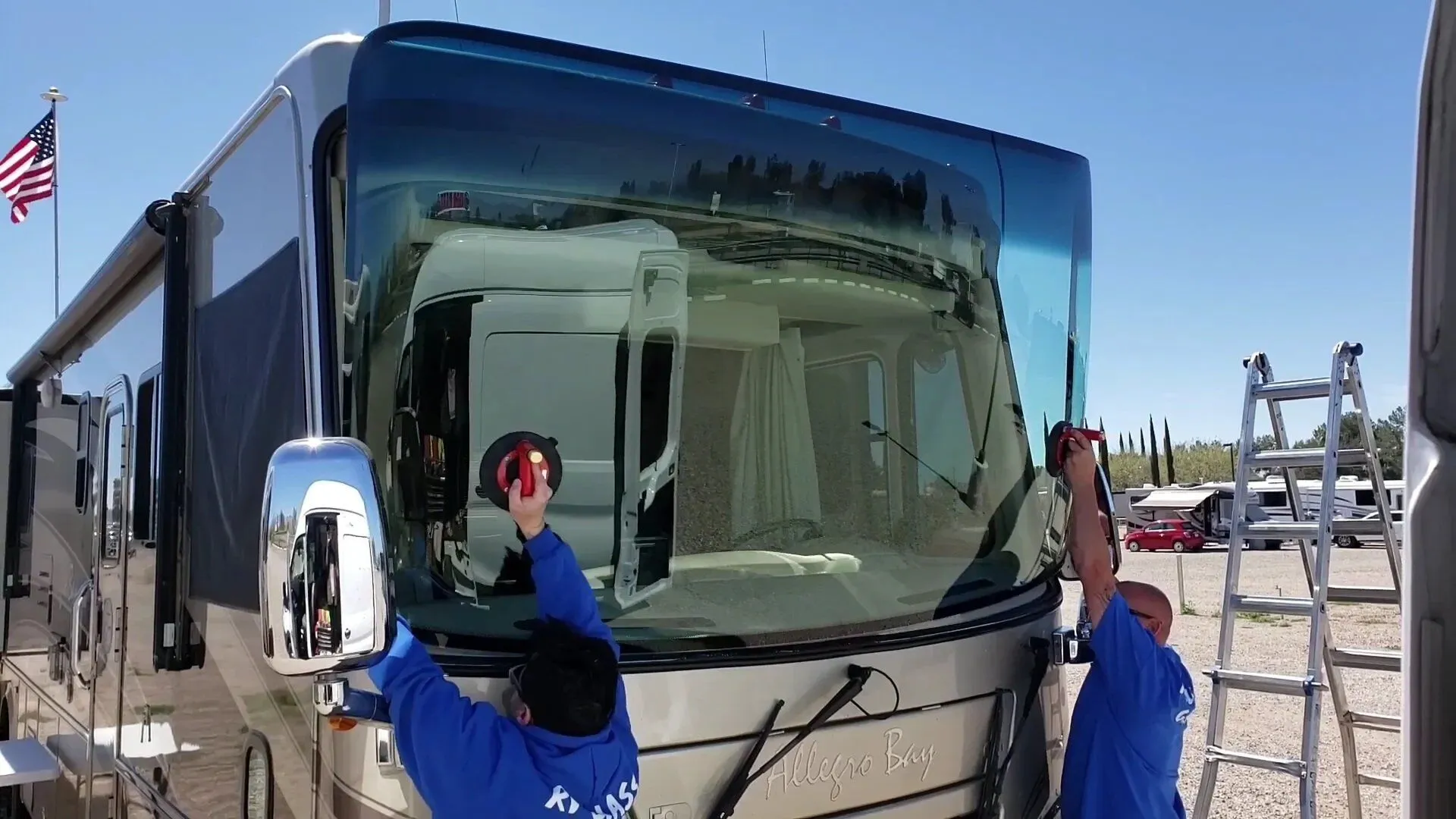
Removal of Old Glass: Specialized suction equipment and cutting tools are used to safely extract the heavy, damaged pane without scratching the coach's bodywork.
Adhesive Application: High-performance, heavy-duty automotive urethanes are applied evenly to ensure a weather-tight, structural seal.
Setting the Glass: Multiple technicians or precision mechanical lifts carefully position the giant pane into the frame.
Curing Time: The vehicle must sit still for a specified period to allow the adhesives to bond completely before it is safe to drive.
Because of these complexities, seeking out a dedicated specialist in motorhome and rv glass and windshields ensures that the job is done safely and correctly the first time.
The Modern Twist: ADAS and Calibration
If your modern RV features advanced safety amenities like forward collision warnings, automatic emergency braking, or lane-keep assist, your windshield houses sensitive cameras and sensors. When the glass is replaced, these systems must be digitally recalibrated to function correctly.
Failing to perform an ADAS and lane departure calibration can cause your safety features to miscalculate distances or fail entirely. For a deeper look into this process, read about what drivers should know about ADAS calibration after windshield replacement and discover why modern vehicles require ADAS recalibration after auto glass service.
Protecting Your Windshield During Future Travels
While you cannot control every rogue pebble on the highway, you can take smart, proactive steps to dramatically lower your risk of sustaining severe glass damage:
Increase Your Following Distance: Give yourself plenty of space behind large commercial trucks, dump trucks, and construction vehicles that frequently drop gravel or kick up rocks.
Regulate Cabin Temperatures: Avoid blasting cold air directly onto a hot windshield on scorching summer days, and don't dump hot water on an icy windshield in winter. Extreme temperature swings cause glass to expand and contract rapidly, turning small chips into giant cracks.
Apply a Protective Film: Consider investing in specialized exterior protective coatings. Solutions like ExoShield windshield protection act as an invisible, impact-resistant barrier that absorbs the brunt of highway debris, significantly reducing the chances of glass failure.
Conduct Routine Inspections: Make it a habit to walk around your coach and check the glass before and after every road trip. Catching a tiny blemish early allows you to resolve it before it expands.
The Importance of Choosing an Experienced Auto Glass Provider
Attempting a DIY fix or hiring a standard automotive technician who lacks large-scale vehicle experience can result in poor sealing, water leaks, wind noise, or even structural failure down the line.
An established professional team brings the necessary tools, heavy-duty materials, and precision calibration equipment to manage the job from start to finish. If you want to learn more about how your coach's built-in safety systems are handled during a glass swap, take a look at this explanation of understanding lane departure system calibration after glass replacement.
To learn more about the team behind these specialized services, visit the Rock Doc Auto Glass about us page to see their commitment to quality, safety, and customer satisfaction across all vehicle classes.
FAQ: Motorhome & RV Windshield Replacement
How long does it take to replace an RV windshield?
The physical replacement process typically takes 2 to 4 hours. However, because RV windshields are large and heavy, the specialized urethane adhesive requires an extended curing time. It is highly recommended to let the vehicle sit for at least 24 hours before driving to ensure a completely safe, weatherproof seal.
Can I drive my RV immediately if I only get a chip repaired?
Yes! Unlike a full replacement, a professional chip or crack repair involves injecting a UV-curable resin into the damaged area. Once cured with a specialized light—which takes just a few minutes—the structural integrity is restored, and you are completely clear to hit the road.
Does insurance typically cover motorhome windshield replacement?
In many cases, yes. Depending on your comprehensive RV insurance policy and the state you live in, glass damage may be covered with a reduced deductible or even at zero out-of-pocket cost. It is best to check with your insurance provider to verify your specific glass coverage benefits.
What happens if I don't calibrate my RV's lane departure warning system after a glass replacement?
If your RV features camera-reliant safety systems, skipping calibration can cause the cameras to read the road incorrectly. This misalignment means your lane departure alerts, collision warnings, and adaptive cruise control may activate at the wrong time or fail to engage when you need them most, creating a serious safety hazard.
Conclusion
Your motorhome's windshield is your window to the world, providing panoramic views of the open road and protecting you from the elements. Because of its massive size and the unique demands of long-distance RV travel, addressing any glass damage quickly is one of the smartest maintenance decisions you can make.
Whether you need a quick resin repair for a stubborn rock chip, a complete glass overhaul, or an advanced system recalibration, working with an experienced professional provider keeps your journey smooth and secure. Ready to get your coach inspected before your next big adventure? Contact the experts at Rock Doc Auto Glass today to request a quote and ensure your vehicle is fully prepared for the road ahead.